Your Cart is Empty


So you want to save money. We’ve all had that moment of checking our bank account and wondering where it all went. Skip the same recycled advice you’ve heard a hundred times. This is a breakdown of 10 ways to save money that actually fit real life. It works if you’re a student figuring out NIL income, an athlete handling a new contract, or just trying to get ahead at work. This isn’t about being cheap. It’s about being intentional with your money so you can build the kind of future you actually want.
Think of this as a playbook, not a random list. No fluff, just clear actions you can start using right away. Each tip includes practical steps and real examples that make sense in different situations, from the locker room to the office. It’s basically a financial training plan to help you build stronger money habits over time.
We’ll cover everything from automating your savings and creating a realistic budget to negotiating bills and leveraging the benefits you already have. For a broader look at building a solid foundation, you can learn how to save money each month with proven strategies to complement these targeted actions. Let's get into it and make your money work for you, for real.

The single most effective way to consistently save money is to remove yourself from the equation. Automating your savings means setting up a recurring, automatic transfer from your checking account to a dedicated savings account right after you get paid. This "pay yourself first" strategy, which authors like David Bach made popular, ensures your savings goals are treated as a non-negotiable expense, just like rent or a car payment. You learn to live on the remaining amount, which curbs impulsive spending.
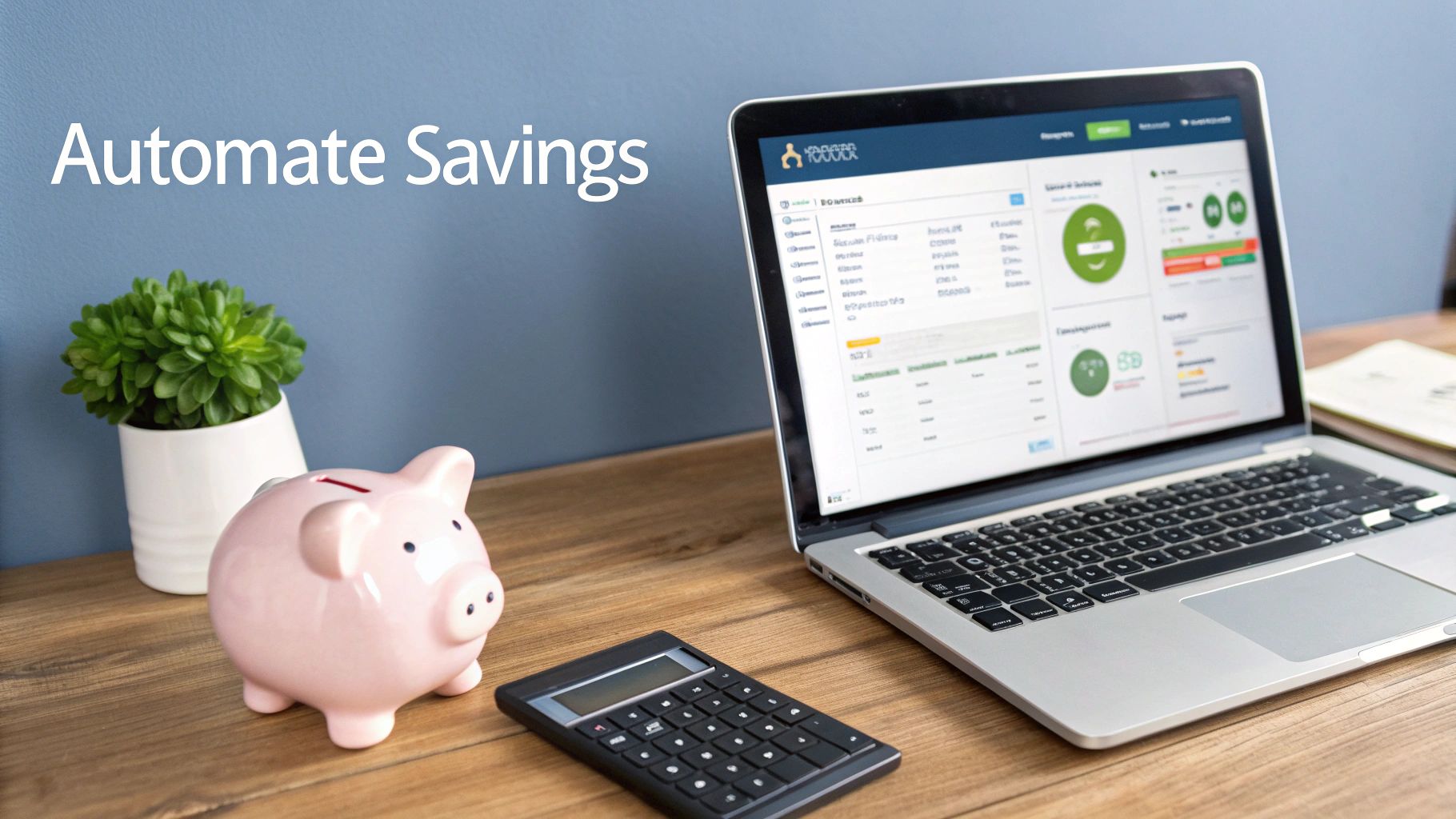
This automated habit is the perfect tool for building your emergency fund, a crucial buffer of 3 to 6 months' worth of essential living expenses. This fund is your financial safety net, protecting you from derailing your goals when unexpected costs like a car repair or medical bill pop up. Without it, you're one surprise away from high-interest debt.
This simple action is one of the foundational ways to save money because it builds a disciplined habit that works for you in the background, securing your financial future without requiring constant willpower.
A budget is not about restriction. It's a strategic plan that gives you permission to spend intentionally. By creating a detailed spending plan, you gain complete visibility into where your money goes. This simple tool, championed by finance experts like Dave Ramsey and Suze Orman, helps you identify wasteful expenses and ensures your spending aligns with your most important financial goals, from paying off debt to building wealth. It transforms money management from a guessing game into a deliberate process.
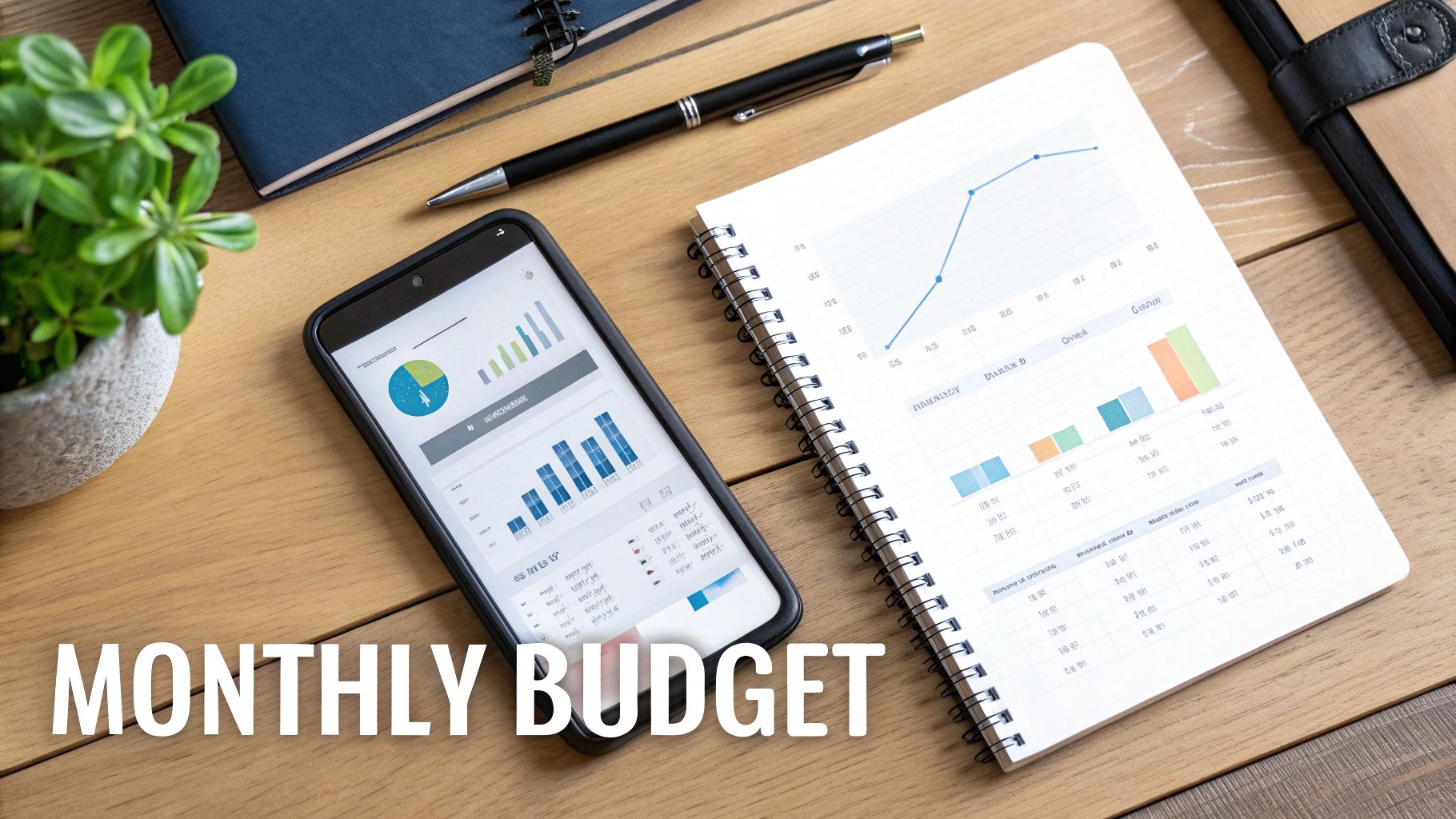
For employees, a budget might reveal that a daily $10 lunch habit adds up to over $2,400 a year, money that could jumpstart an investment account. For a college athlete managing NIL income, a budget helps prevent the lifestyle inflation that often derails early professional careers. It's a foundational tool that empowers you to control your financial destiny, making it one of the most powerful ways to save money.
Small, recurring charges are the silent killers of a budget. Think streaming services, gym memberships, subscription boxes, and various apps. These "set it and forget it" expenses are designed to feel insignificant, but they compound into a substantial annual cost. Regularly auditing these automated payments is one of the quickest ways to save money, freeing up hundreds or even thousands of dollars with minimal impact on your actual lifestyle.

This tactic isn't about giving up everything you enjoy. It's about conscious spending. Studies show that 67% of people with gym memberships never use them, wasting an average of $55 a month. Similarly, many professionals and athletes we work with uncover 5 to 10 unused subscriptions on their expense reports, totaling over $2,000 annually. By cutting just half of these, you can redirect a significant amount toward your savings goals.
This focused cleanup of your recurring expenses is a high-impact strategy because it provides an immediate boost to your monthly cash flow, making it a cornerstone of effective financial management.
For most households, food is the second-largest expense right after housing, making it one of the most powerful areas to cut costs. Strategic shopping and meal planning is a one-two punch against overspending. It eliminates impulse buys and drastically reduces food waste. By planning your meals for the week, creating a detailed shopping list, and sticking to it, you take control of your grocery bill instead of letting hunger or clever marketing dictate your spending.
This proactive approach is championed by financial coaches like Dave Ramsey and countless meal-prep influencers because it directly targets a major, variable budget category. The impact is immediate and significant. For example, a family can easily save over $150 a month just by switching to generic brands and planning meals around weekly sales. Professional athletes often use meal prep to reduce their restaurant spending from over $500 down to just $200 a month, all while controlling their nutrition.
This is one of the most effective ways to save money because it gives you direct command over a huge portion of your monthly spending, turning a major expense into a major savings opportunity.
High-interest debt, like credit cards or payday loans, acts like a financial anchor, actively pulling your net worth down. Every dollar you pay in interest is a dollar you can't save or invest. Eliminating this debt is one of the most powerful ways to save money because it frees up your largest wealth-building tool: your income. The high interest rates, often 20% or more, mean these debts grow incredibly fast, making them a top priority to tackle.
Think about it. Paying off a 20% APR credit card is like getting a guaranteed 20% return on your money. No investment can consistently offer that. For an athlete, clearing debt before a second contract can be the difference between temporary wealth and generational security. For an employee, becoming debt-free is directly linked to reduced stress and higher productivity.
This focused approach is essential for anyone serious about building a strong financial foundation. To go deeper on these payoff strategies, here's a guide on how to pay off debt fast.
One of the most overlooked ways to save money is sitting right in your employee handbook. Your company’s benefits package is a core part of your compensation, and failing to maximize it is like turning down a raise. Many employers offer valuable perks like 401(k) matching, tax-advantaged accounts, and wellness programs designed to boost your financial and physical health. Taking full advantage of these is a direct path to increasing your net worth and long-term security.
Think about it. If your employer offers a 5% 401(k) match and you earn $50,000, that’s an extra $2,500 of free money per year for your retirement. Over a 20-year career, that alone could compound into a massive sum. Similarly, using a Health Savings Account (HSA) or Flexible Spending Account (FSA) allows you to pay for medical or childcare expenses with pre-tax dollars, creating an immediate 20 to 30% discount on those necessary costs.
This strategy is a powerful way to save money because it uses your existing employment to unlock tax savings and free cash, automating your financial progress without changing your budget.
Many of your biggest recurring bills, like internet, insurance, and your cell phone plan, are not set in stone. Actively negotiating these service rates is a powerful but often overlooked strategy for saving money. Companies frequently offer better deals to new customers, but they are often willing to extend similar discounts to loyal ones who simply ask, especially when faced with losing them to a competitor.
This tactic requires a small investment of your time for a significant payoff. A few phone calls can trim hundreds or even thousands of dollars from your annual expenses without changing your lifestyle at all. For example, asking for a loyalty discount on your cable bill can cut it by 20 to 30%, and shopping for new auto insurance quotes often saves an average of 30%, which could be over $500 a year.
This approach is one of the most direct ways to save money because it lowers your fixed monthly costs, freeing up cash flow that can be redirected toward your savings goals or debt repayment.
While cutting expenses is effective, one of the most powerful ways to save money is by increasing your earning power. Focusing solely on reducing costs has a limit, but your income potential is far more expansive. This strategy involves either advancing in your primary career to secure raises and promotions or developing side hustles that generate additional revenue streams. This approach doesn't just help you save more today. It compounds over your entire career, dramatically changing your long-term financial outcome.
If you’re an employee negotiating a 10% raise or an athlete taking advantage of NIL opportunities, increasing your income gives you more to work with from the start. For example, freelancing just 10 hours a week at $50 per hour can add over $25,000 to your annual income. That extra cash can boost your savings, speed up debt payoff, and create room for new investments.
Impulse buys are silent budget killers. The 30-day rule is a simple yet powerful behavioral trick that creates a mandatory cooling-off period between the moment you want something and the moment you buy it. By forcing yourself to wait 30 days before purchasing any non-essential item over a certain price, you give yourself time to separate genuine needs from fleeting desires. This strategy directly combats emotional spending and buyer's remorse, ensuring your money goes toward things you truly value.
This method is incredibly effective. Studies show the average person spends hundreds on impulse buys monthly. By implementing this rule, you could eliminate over half of those unplanned expenses, potentially saving thousands annually. It works because it gives you time to research better deals, question the purchase's real utility, and see if the initial excitement fades. It's one of the best ways to save money because it builds mindfulness into your spending habits.
Saving money is the first step, but investing is how you truly build long-term wealth. Investing puts your saved dollars to work, allowing them to grow through the power of compound interest. This means your money earns returns, and then those returns start earning their own returns, creating a snowball effect over decades. This strategy, championed by figures like Warren Buffett and the FIRE movement, transforms your earned income into a self-growing asset base for retirement and beyond.

The difference between starting early and waiting is massive. An investor who puts away $300 per month from age 25 could have over $1 million by age 65, assuming an 8% average return. If they waited until 35 and invested $500 per month, they'd end up with less than half that amount. Time is your most valuable asset.
This powerful method is one of the essential ways to save money because it moves you from just saving to actively building a secure financial future. Learn more about how to maximize an employer 401(k) match to get started.
| Strategy | Implementation Complexity | Resource Requirements | Expected Outcomes | Ideal Use Cases | Key Advantages |
|---|---|---|---|---|---|
| Automate Savings & Build Emergency Fund | Low to Medium: one-time setup with bank/payroll; periodic maintenance | Regular paycheck or lump sums; separate savings account; bank tools | Consistent savings; 3 to 12 months emergency buffer; reduced emergency borrowing | Variable income earners, employees, new savers | Removes decision fatigue; predictable resilience; enforces discipline |
| Create and Follow a Budget | Medium: initial tracking and category setup; ongoing reviews | Time for tracking; app or spreadsheet; discipline | Clear spending visibility; reduced overspending; funds aligned with goals | Anyone needing spending control; those at risk of lifestyle inflation | Reveals leaks; prioritizes spending; prevents debt accumulation |
| Reduce Subscription and Recurring Expenses | Low: audit and cancel; repeat quarterly | Access to statements; time to review subscriptions | Immediate monthly savings; reclaimed recurring cash | Households with many automated charges; high-income earners with unnoticed spend | Quick wins with minimal lifestyle impact |
| Practice Strategic Shopping and Meal Planning | Medium: weekly planning and prep; habit formation | Time for meal planning; storage for bulk buys; grocery knowledge | Lower grocery bills; less food waste; healthier eating | Families, students, athletes on tight budgets | Direct controllable savings; time efficiency; healthier choices |
| Eliminate High-Interest Debt | Medium: prioritized payoff plan; behavioral change required | Extra cash flow for payments; tools for consolidation if needed | Improved cash flow; lower interest costs; better credit score | Those carrying credit card/payday or predatory loans | Highest ROI via interest savings; frees income for investing |
| Leverage Employee Benefits and Wellness Programs | Low to Medium: plan review and enrollment during windows | Time to understand plans; employer-provided platforms | Tax-advantaged savings; increased take-home value; insurance protection | Employees with benefits access; mid-career workers | Immediate guaranteed returns (401(k) match); tax savings |
| Negotiate Bills and Service Rates | Low: research and calls; periodic renegotiation | Time for calls; competitor quotes; willingness to switch | Lower annual bills; immediate cash flow improvement | Households with high recurring bills; busy professionals seeking ROI | High savings per hour; no lifestyle change required |
| Increase Income Through Side Hustles or Career Development | Medium to High: skill building, networking, business setup | Time, possible training costs, platform/tools | Higher long-term earnings; increased savings capacity | Ambitious professionals, athletes, career builders | Largest long-term impact; scalable and repeatable income |
| Use the 30-Day Rule for Major Purchases | Low: behavioral commitment to waiting period | Self-discipline; list or wishlist tracking | Fewer impulse purchases; reduced buyer's remorse; preserved cash | Impulse buyers; high earners prone to lifestyle inflation | Simple to implement; immediate reduction in wasteful spending |
| Invest for Long-Term Wealth (Retirement and Beyond) | Medium: account setup, asset selection, periodic rebalancing | Investable capital; brokerage/retirement accounts; basic financial knowledge | Compound growth over decades; retirement security; passive income | Young professionals, long-term planners, those with surplus savings | Exponential growth via compounding; tax-advantaged vehicles |
We’ve covered a lot here, from automating your savings to planning meals and knocking out high-interest debt. It might feel like a lot, but getting control of your money isn’t about one big move. It comes down to small, intentional steps done consistently. These 10 ways to save money aren’t just a random list. They’re a playbook for building a stronger financial future, whether you're managing a signing bonus, navigating NIL deals, or just trying to cut stress and grow your wealth.
The real magic happens when you move from reading to doing. The goal isn't to perfectly implement all ten strategies by next week. That’s a surefire way to get overwhelmed and give up. Instead, the most powerful thing you can do right now is choose one. Just one.
Think about what resonated most with you.
Your first move doesn’t have to be the biggest, it just has to be a move. That single action creates momentum. Canceling one subscription proves you can cut costs. Setting up one automatic transfer proves you can pay yourself first. Making one call to negotiate a bill proves you can advocate for your own bottom line. These small wins build the confidence you need to tackle the next challenge, and then the one after that.
Mastering these concepts goes way beyond just having more dollars in your account. It’s about reducing the constant, low-level stress that comes with financial uncertainty. It's about gaining the freedom and flexibility to make choices based on your goals and values, not your financial limitations. For a corporate team, this means less distraction and higher productivity. For an athlete, it means building a foundation for a life after the game. For anyone, it means trading anxiety for a sense of control and empowerment.
You have the game plan in front of you. The key isn't knowing all 10 ways to save money; it's about executing on one. Pick your play, get in the game, and start building the future you deserve. You've got this.

The simplest way is to automate your savings. Set up a recurring transfer from your checking account to a separate savings account right after you get paid. This removes the need for willpower and helps you build savings without thinking about it.
A good target is 3 to 6 months of essential living expenses. If that feels overwhelming, start with $1,000 as a short-term goal, then build from there. This fund protects you from unexpected costs like car repairs or medical bills.
High-interest debt drains your income through interest payments, often at rates of 20% or more. Paying it off is like getting a guaranteed return on your money and frees up cash you can use for saving or investing instead.
Recurring charges like streaming services or unused memberships can quietly add up to hundreds or even thousands of dollars each year. Regularly reviewing and canceling unused subscriptions can quickly improve your monthly cash flow.